Ronaldinho – The Magician of Football
Whether you recall his unforgettable bending shot against David Seaman in the 2002 World Cup final, his hypnotic dribbles around Barca’s Camp Nou, or his cheeky no-gaze feeds that left protectors puzzled, Ronaldinho’s skill has awed fans worldwide. His miracle on the field exceeds objectives and helps—it’s the enjoyment, the resourcefulness, and the pure adoration for the diversion that made him a sign. Re-encounter the unforgettable snippets of his profession, from his early days shining for Porto Alegre to his enduring effect on worldwide football. Prepare to be mystified by the account of the conjurer who permanently changed how we see the wonderful diversion.
Introduction to Ronaldinho
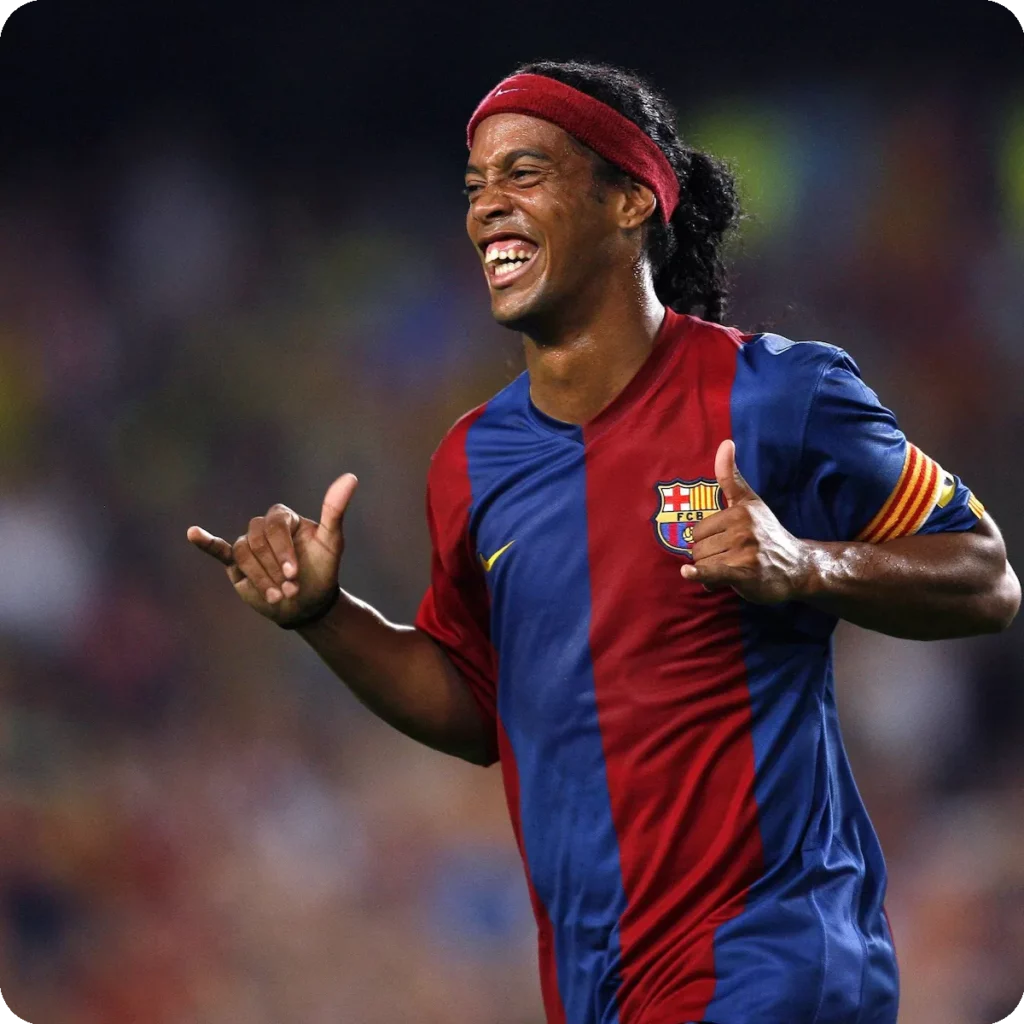
Few players in history united instinct with accomplishment as effortlessly as Ronaldo de Assis Moreira—better known as Ronaldinho Gaúcho. Born in Porto Alegre on March 21st, 1980, the Brazilian maestro grew up juggling futsal balls on humble courts, cultivating an elastic touch and playful swagger that would later enchant packed stadiums worldwide. He burst onto the professional scene with Grêmio at seventeen, rapidly bewitching Europe with Paris Saint-Germain before achieving true glory at FC Barcelona, where his radiant grin lit up the Camp Nou and his creativity reinvigorated a sleeping titan.
Yet Ronaldinho’s appeal transcended club colors and national borders. With a toothy grin, swaying hips, and an arsenal of elastico dribbles, no-look passes, and toe-poked finishes, he reminded spectators that football could still be joyous theater. Behind the smiles laid a ferocious competitive spirit: an admirable résumé boasting a FIFA World Cup, UEFA Champions League, Copa Libertadores, two FIFA World Player of the Year awards, and the coveted 2005 Ballon d’Or. He connected generations, blending Pelé’s flair, Maradona’s improvisation, and Messi’s efficiency while contributing his own samba-inspired artistry. This prologue traces the journey that fashioned football’s most charismatic artist of modern times.
Early Life and Career Beginnings
Ronaldinho’s journey began amidst the lively alleys of Vila Nova, located in Porto Alegre, Brazil. Born to humble means, his early years were stained by the untimely loss of his father, João, when Ronaldinho had only seen eight summers. His mother, Dona Miguelina, became his anchor, nurturing his passion for the beautiful game. From a tender age, Ronaldinho was enveloped by Brazil’s fervent football culture, where he sharpened his skills on unpredictable streets and tight futsal courts. It was here that he cultivated his distinctive playing style, mastering nimble footwork and close control of the ball that would later typify his trademark.
By the time the young prodigy had seen thirteen years, Ronaldinho’s extraordinary talent had already started causing ripples. He notoriously scored twenty-three goals in a single youth match, attracting the eyes of scouts from across the globe. His breakthrough moment arrived when he joined Grêmio’s youth setup, rapidly advancing to the senior team at a mere sixteen years of age. His dazzling displays in local competitions earned him a spot on Brazil’s Under-17 national team, and it wasn’t long before the entire world took notice. Ronaldinho’s flair, vision and creativity with the ball were evident, establishing the platform for his meteoric rise in world football.
Clubs He Played For
Ronaldinho’s career spanned across several prestigious clubs, each benefitting from his magical touch and playmaking ability. His journey through the world of football is marked by notable contributions at clubs both in Brazil and Europe.
- Grêmio (1998 – 2001)
In his youth, Ronaldinho shone for Grêmio, his childhood team in Porto Alegre. Just 18 when he debuted professionally, he dazzled viewers with skills that would define his career. For Grêmio in this time, Ronaldinho played a pivotal role in the team’s triumphs, spearheading their 1999 Copa Sul-Minas victory. His eye-catching efforts garnered notice not just in Brazil but globally, as he demonstrated an ability to dominate matches with imagination, creativity, and technical mastery. Grêmio proved the ideal launching point for Ronaldinho, readying him for an even bigger test soon after.
- Paris Saint-Germain (2001 – 2003)
In 2001, Ronaldinho made the leap to Europe, joining Paris Saint-Germain in France. Though his Parisian period was brief, his impact was instantaneous. He injected excitement into the French capital through mesmerizing dribbling and artful playmaking. His two seasons at PSG showcased brilliance, even if the team itself did not achieve as expected. Still, Ronaldinho’s performances attracted interest from larger clubs, especially FC Barcelona where he would find a home.
- FC Barcelona (2003 – 2008)
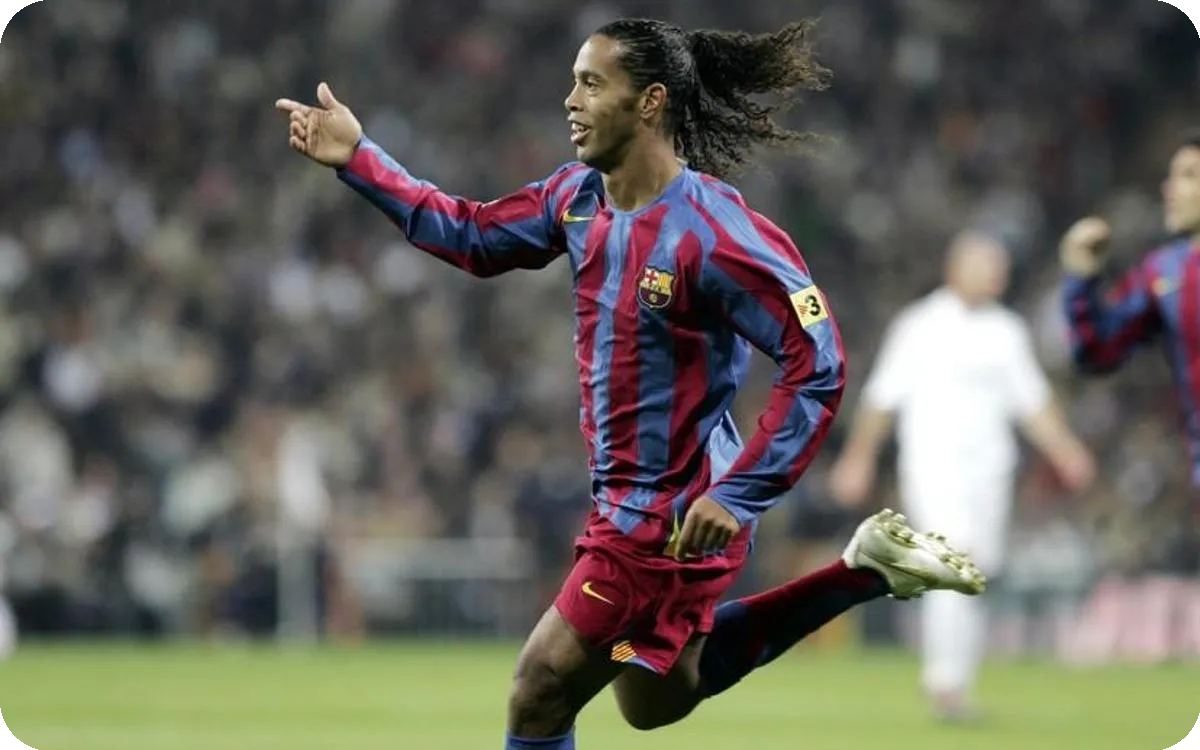
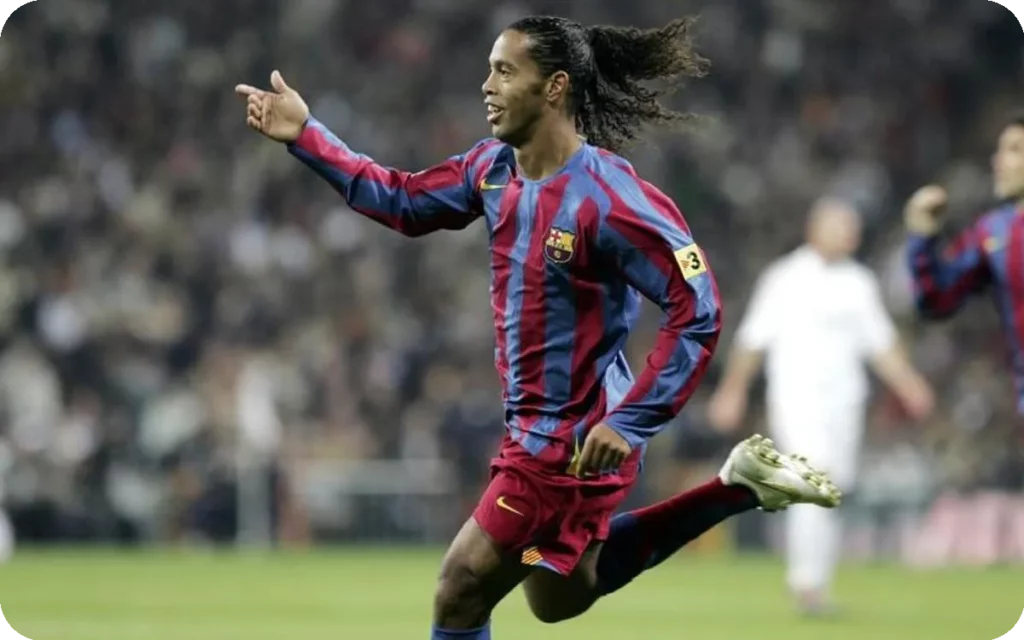
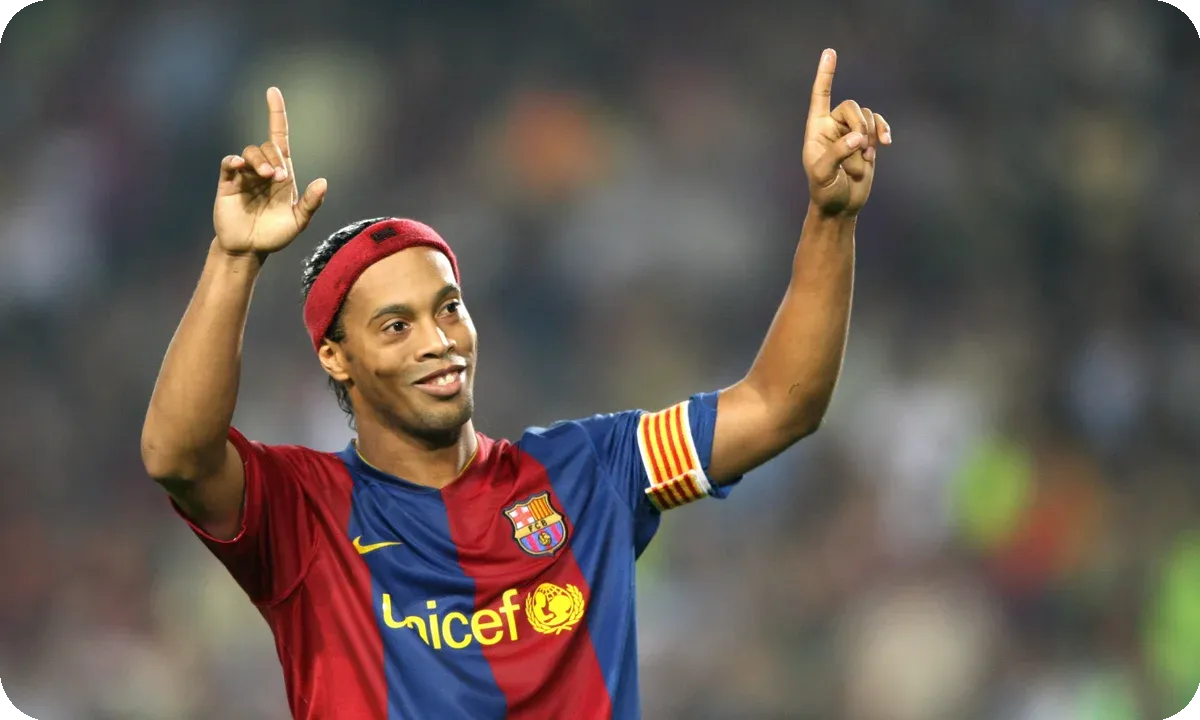
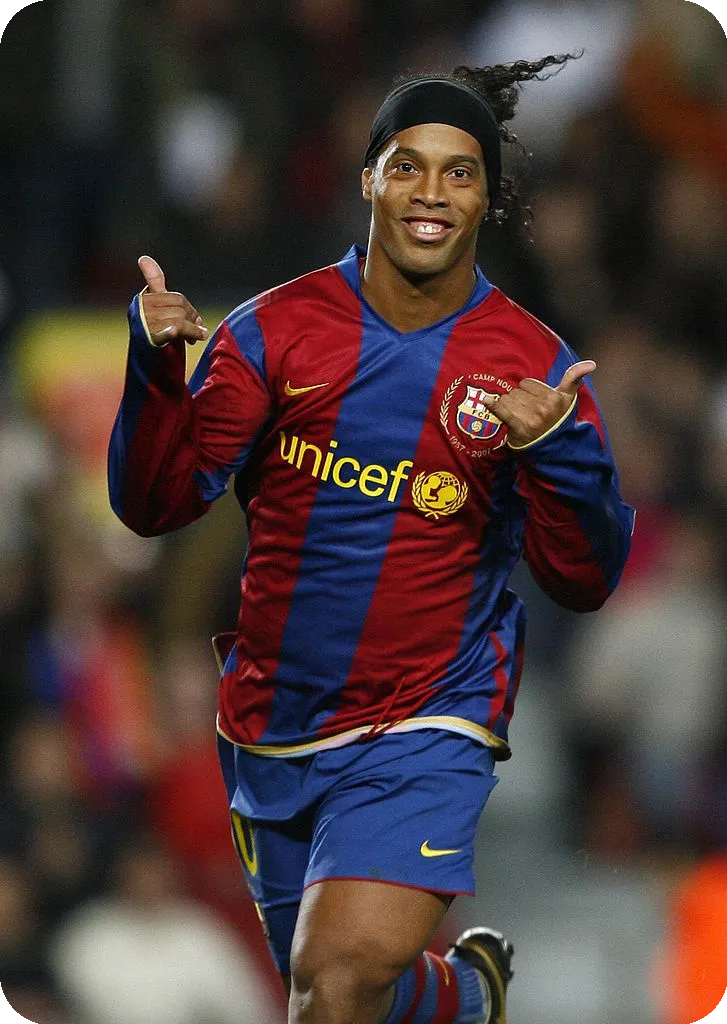
Arguably the peak of Ronaldinho’s career, his Barcelona tenure cemented his legacy among the greats of his generation. Joining the Catalan club in 2003, Ronaldinho rapidly became the heartbeat of the team. Under coach Frank Rijkaard, he guided Barcelona to numerous triumphs, including two La Liga titles in 2004-2005 and 2005-2006 plus the coveted UEFA Champions League trophy in 2006. His jaw-dropping dribbling, vision, and knack for crafting chances from nothing brought a new level of excitement to the Nou Camp. Ronaldinho’s unforgettable displays, like a legendary performance at the Santiago Bernabéu where even Real Madrid fans applauded his artistry, are etched in the club’s history.
- AC Milan (2008 – 2011)
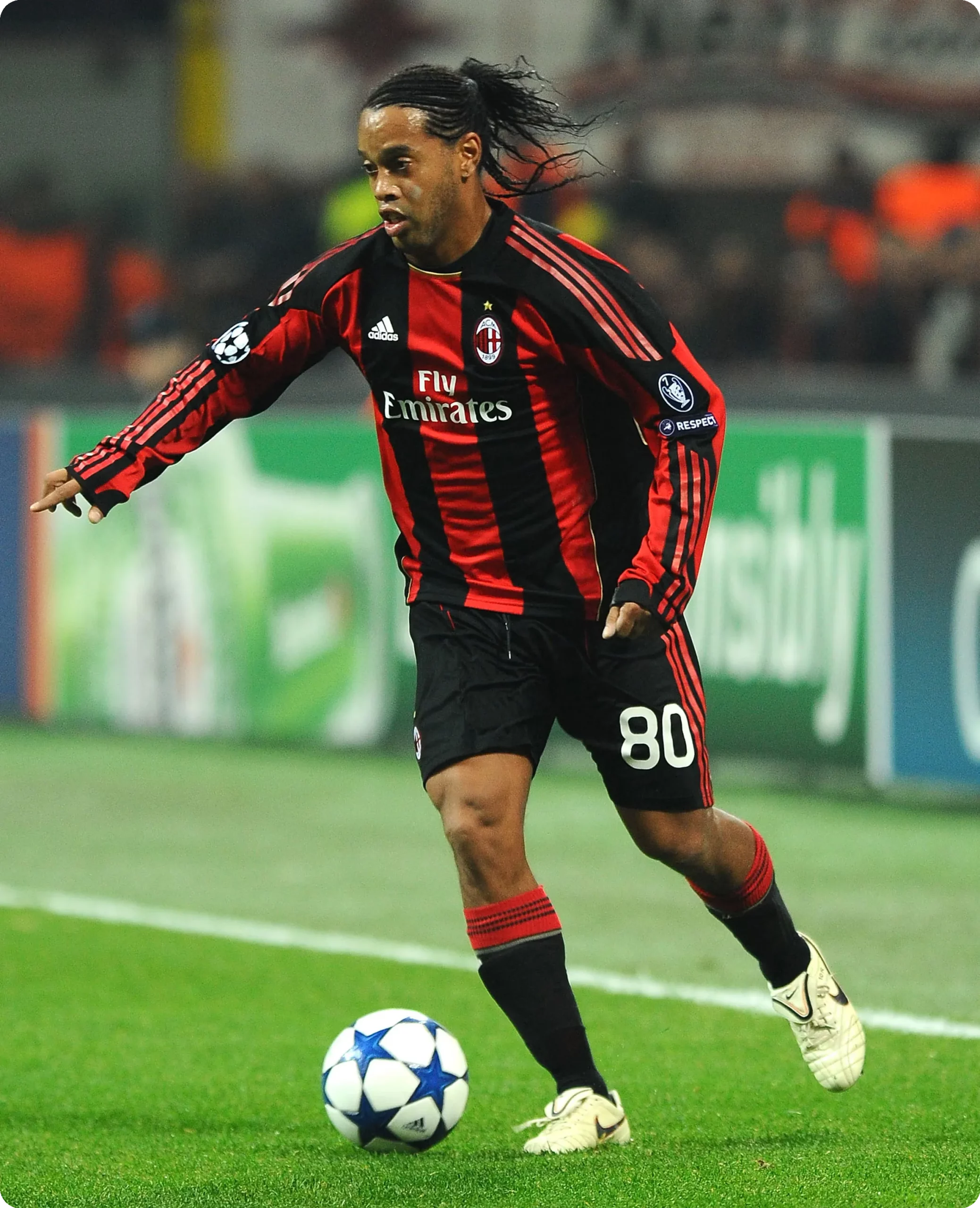
When Ronaldinho moved to AC Milan in 2008, he showed his incredible ability, though in a slightly modified role. At Milan, he evolved from a dazzling entertainer to a more mature playmaker, giving key assists and continuing to make a sizable impact in Serie A. He helped Milan win the 2009 Supercoppa Italiana and aided their Champions League efforts, even if Milan never achieved the same heights as during his Barcelona days. Despite this, his technical brilliance and leadership still shone brightly.
5. Flamengo (2011 – 2012)
In 2011, Ronaldinho returned to Brazil, joining Flamengo in Rio de Janeiro. Moments of magic marked his return home, such as a stunning hat-trick against Santos. However, his time at Flamengo was transient, and in 2012 he departed the club, leaving behind a legacy of splendid performances despite the team’s inconsistency during his tenure.
6. Atlético Mineiro (2012 – 2014)
Ronaldinho’s next adventure carried him to Atlético Mineiro in 2012, where once more he demonstrated his worth. Leading the team to their inaugural Copa Libertadores title in 2013 was the highlight of his time at Atlético. Ronaldinho’s guidance and experience were invaluable then, and still he exhibited his exceptional ball skills. His free-kick against Tijuana in the Libertadores quarterfinals stands out as one of his finest moments with the club.
7. Querétaro (2014–2015)
In 2014, Ronaldinho moved to Mexico, joining Querétaro in Liga MX. His brief time at Querétaro was magical, as he continued to captivate fans with flashes of his elite talent and unrivaled creativity on the ball. While past his prime, Ronaldinho’s presence in the league generated excitement for Mexican football and gave supporters memorable glimpses of his enduring skills.
8. Fluminense (2015)
Ronaldinho’s final professional stop was with Fluminense, where he played for a short stint in 2015. Although he made only a handful of appearances, his impact on matches was still palpable. He closed the chapter of his extraordinary career at the age of 35 with one last performance.
Ronaldinho’s travels to these clubs left an indelible imprint on the soccer world. His unprecedented abilities, imaginative playmaking, and pure joy for the game propelled him to iconic status globally, cementing his place as one of the most cherished players ever to step onto the pitch.
Style of Play and Signature Moves
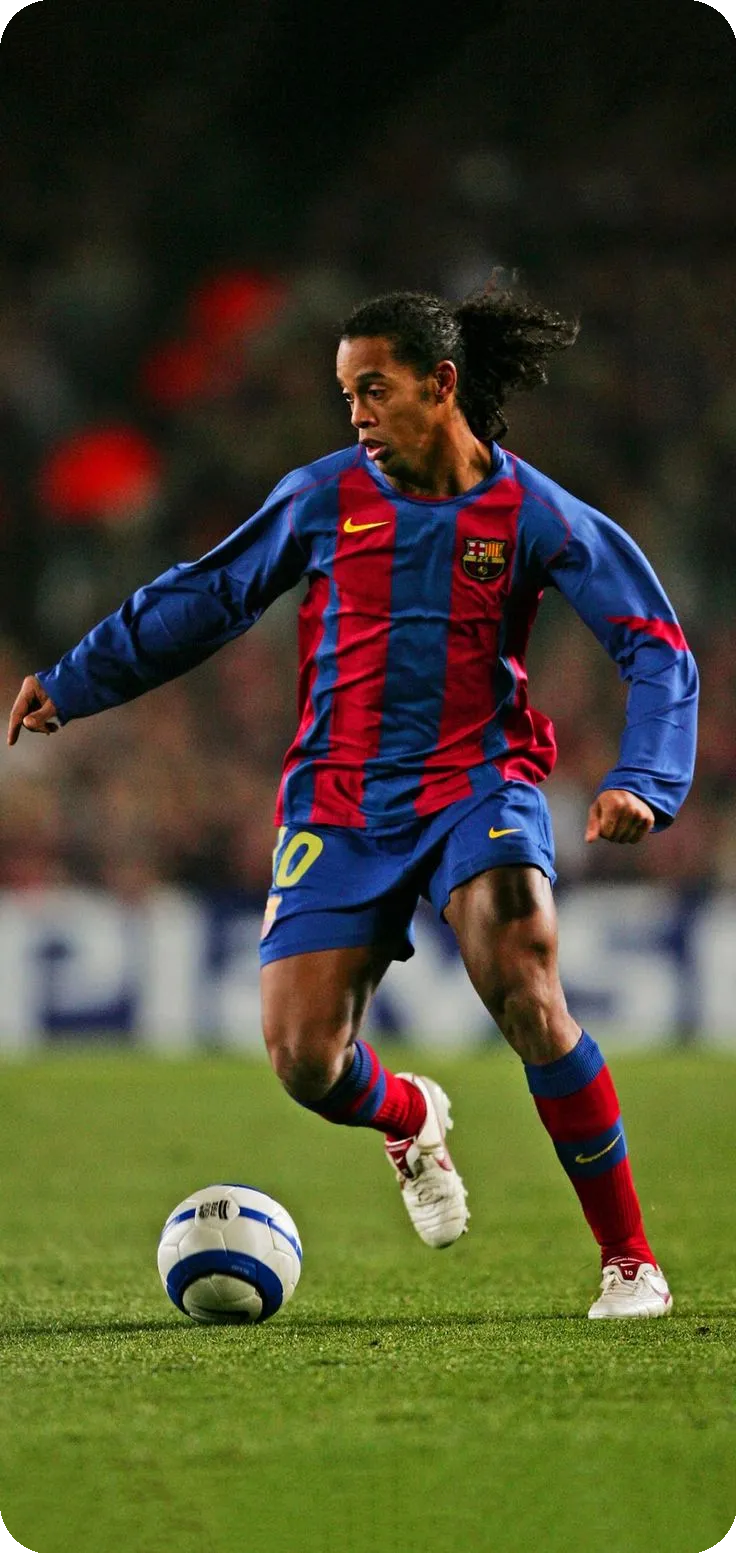
Ronaldinho’s style defied textbooks: he dribbled with the sole as often as the instep, used the elastico (flip-flap) to wrong-foot markers, and perfected the no-look pass years before social-media highlight reels. Unlike pure wingers, he drifted between lines, receiving centrally, then exploding wide with a double-stepover. His lower-body flexibility—honed in futsal—let him manipulate the ball as though his ankle were a wrist.
Key weapons:
Laudrup Drag-back – Shield with back, pull with sole, pirouette away.
But numbers alone miss the poetry: every touch carried improvisation, as if samba choreographed in studs.
- Elastico – Snap-back outside-inside touch; victims included Nesta, Terry, and Gattuso.
- No-look Pass – Eyes to the left, ball threaded right; Xavi once said it felt like “receiving a gift you never saw wrapped.”
- Toe-poke Finish – A futsal relic that surprised goalkeepers expecting laces.
- Free-Kick Dip – High-arcing trajectory that dropped violently (ask Seaman, 2002 World Cup quarter-final).
Influence on World Football
Ronaldinho had an immense impact on world football that extended beyond his dazzling field performances. He redefined what it meant to be a creative player, demonstrating to the globe that soccer could be as much about artistry and flair as structure and strategy. His style inspired a generation of athletes searching to bring joy, spontaneity, and technical brilliance into their own games.
As one of football’s most influential figures, Ronaldinho shaped countless promising talents’ careers, especially in Brazil, where his success symbolized what could be achieved with skill, creativity, and passion. Players like Neymar, who credits Ronaldinho as a key inspiration, started emulating his moves and playing style, blending flair with technical mastery. His ability to entertain while competing at the highest level made him a worldwide ambassador for the sport, attracting new fans from across the earth.
On the tactical side, Ronaldinho’s free-roaming role at Barcelona revolutionized the concept of the “enganche”—a player who drifts between lines, generating space and opportunities. His playmaking talent and vision paved the way for a new wave of attacking midfielders focused on creativity and unpredictability, changing how soccer was played in the 2000s. Ronaldinho’s influence continues to resonate, both in the athletes he inspired and the beautiful moments he gifted fans worldwide.
Honors and Awards
Ronaldinho’s distinguished career shone with a lustrous assemblage of honors and awards, highlighting his remarkable talent, sway, and donations to the game of football. His chronicle of single achievements and team triumphs echoes his position as one of sport’s most cherished and accomplished footballers.
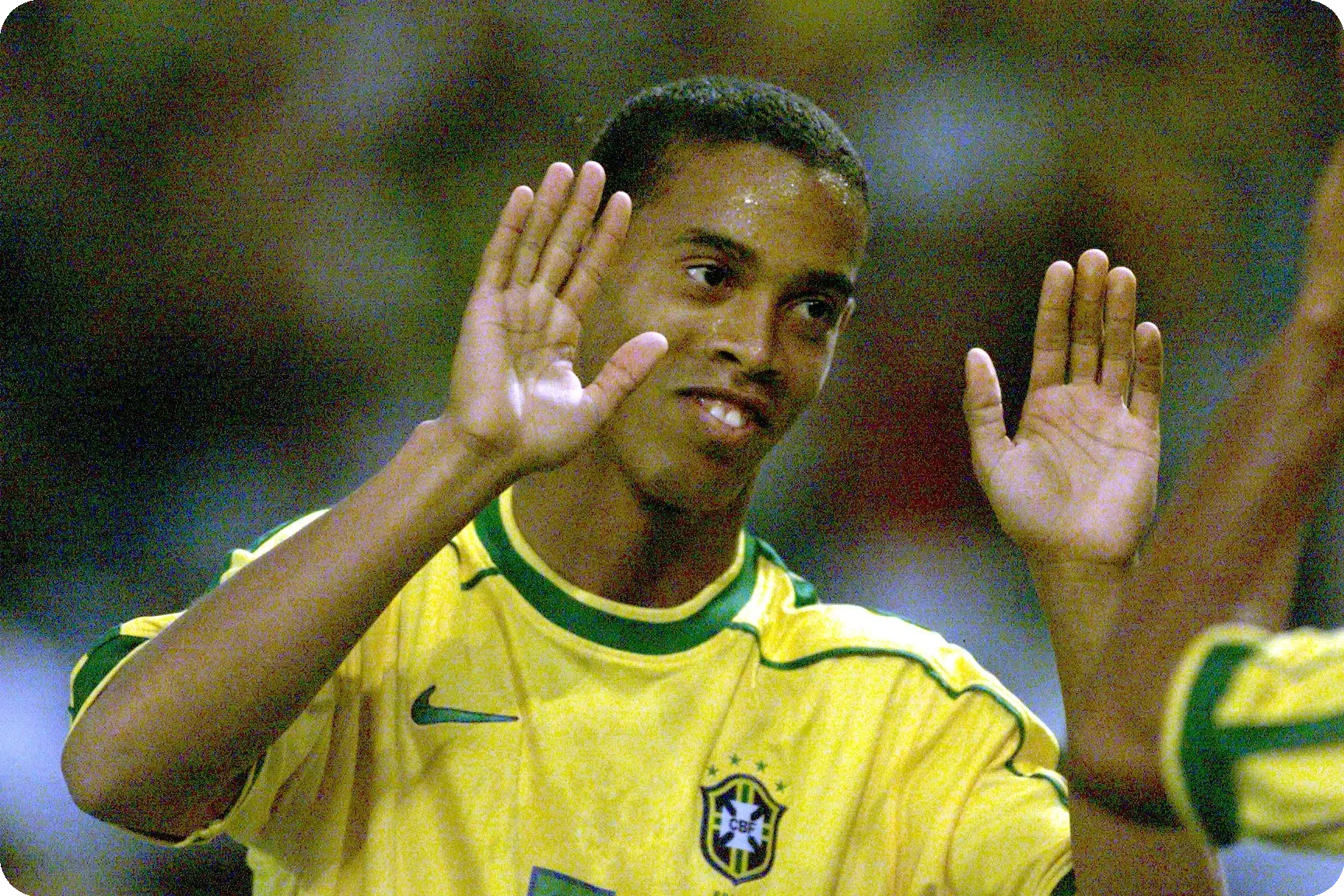
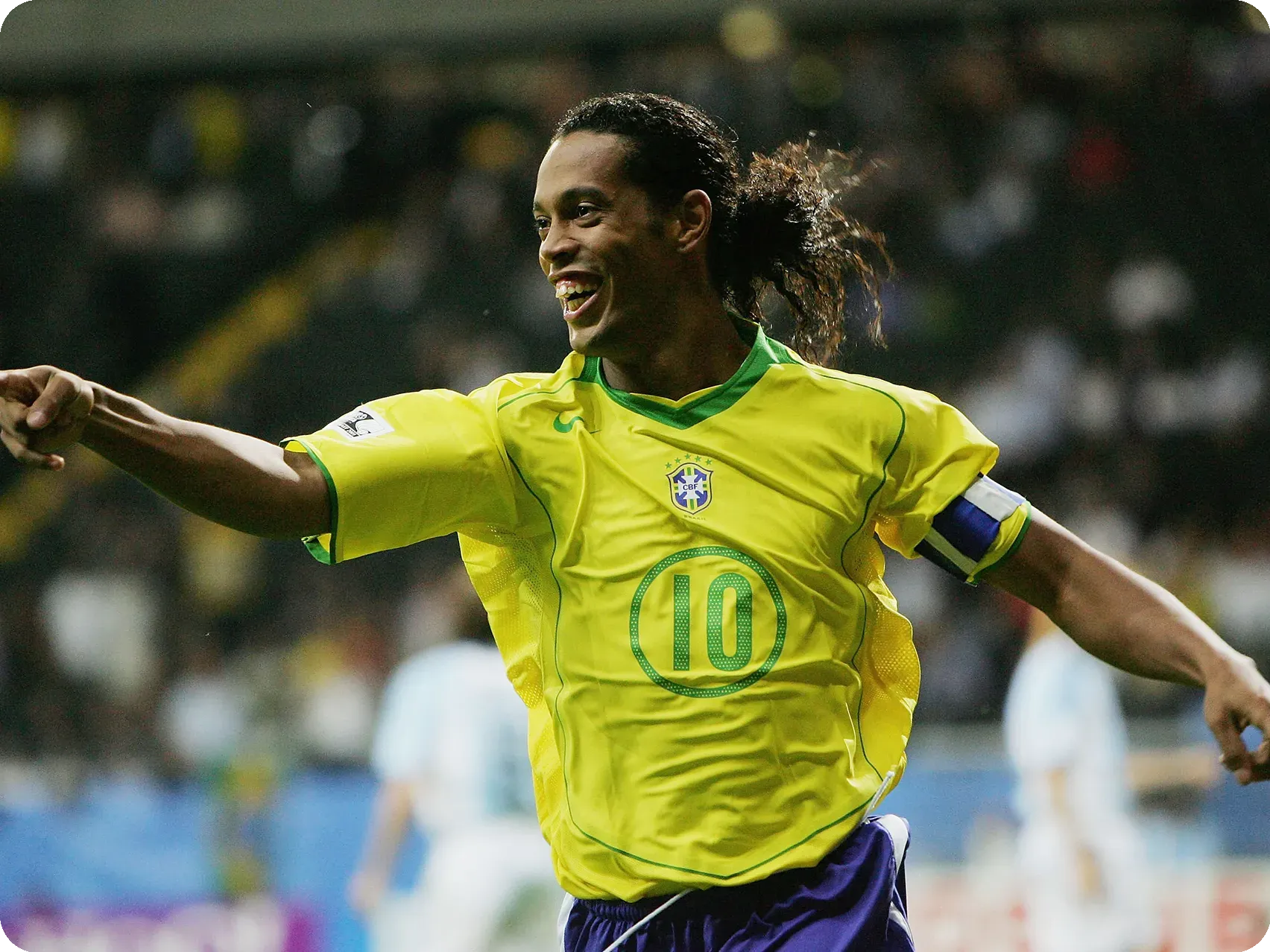
On soccer’s global stage, Ronaldinho helped lift Brazil to safeguard the FIFA World Cup in 2002, playing a pivotal role in their victory with his creativity and panache. He too won the Copa América in 1999 and the FIFA Confederations Cup in 2005, cementing his reputation as one of Brazil’s footballing greats.
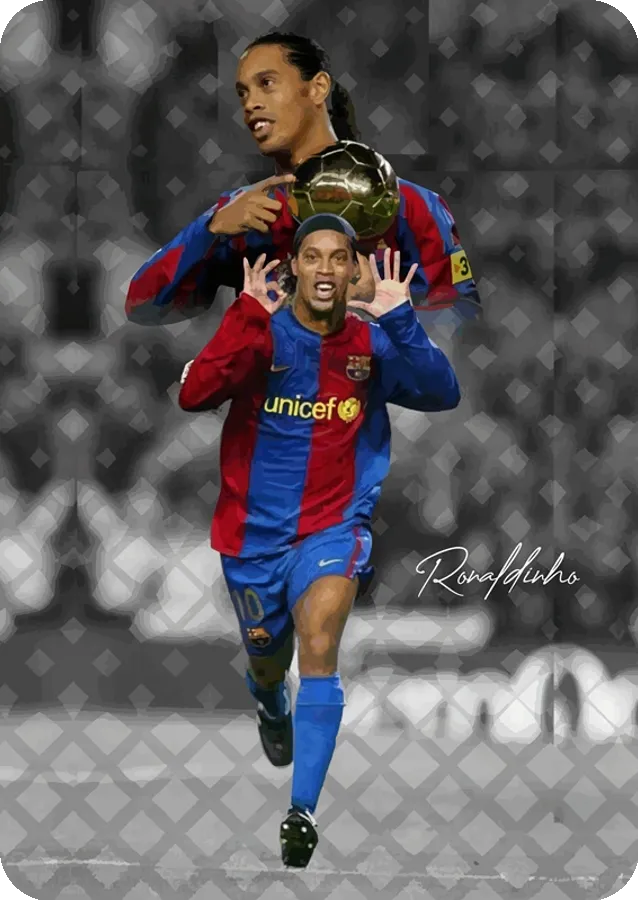
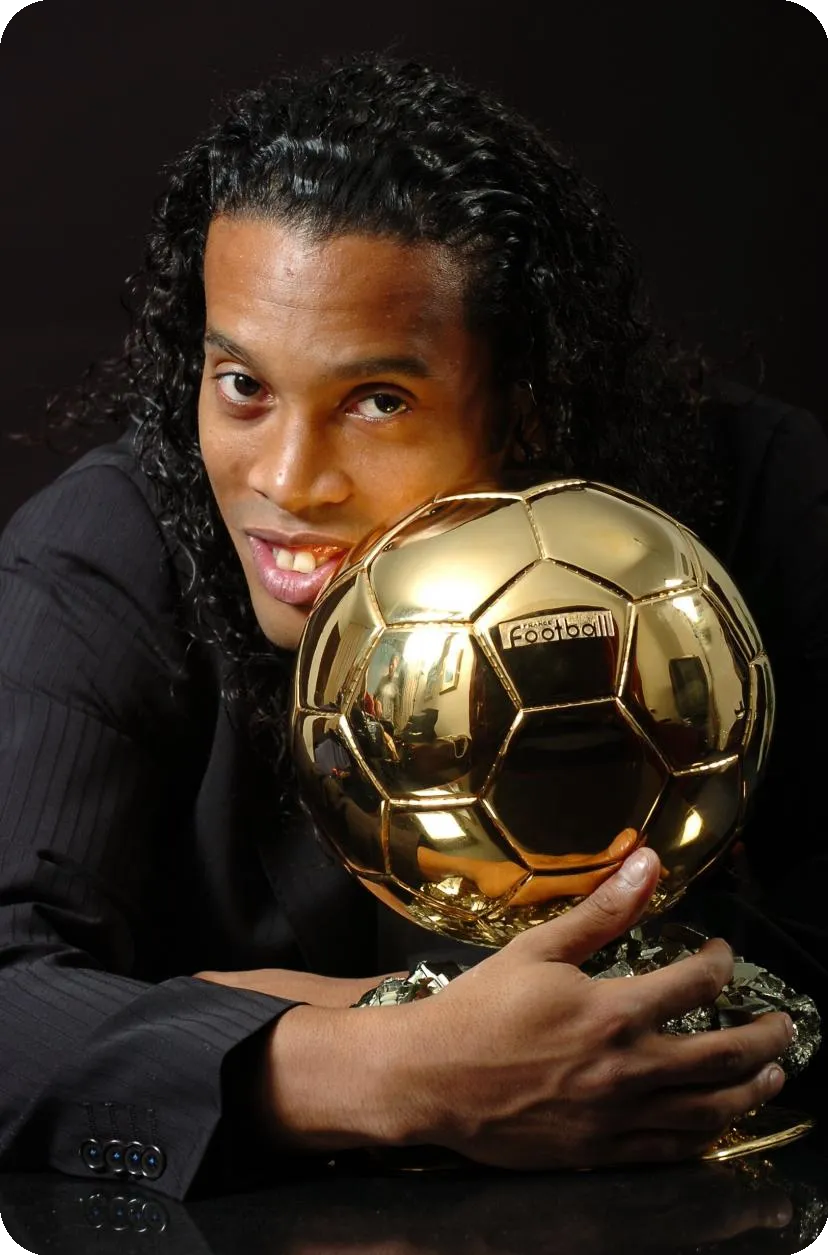
At the club level, his period at FC Barcelona was particularly prosperous, where he led the team to two La Liga titles in 2004-2005 and 2005-2006 and the UEFA Champions League in 2006. His unbelievable performances earned him the Ballon d’Or in 2005, a testimony to his brilliance in the 2004-2005 season, as well as back-to-back FIFA World Player of the Year awards in 2004 and 2005.
Singly, he garnered manifold accolades, encompassing the Golden Boot in 2009 and designation as the South American Footballer of the Year in 2013. His extraordinary donations to the sport were too honored with his induction into the Brazilian Football Museum Hall of Fame and the FC Barcelona Legends list.
Quotes About Ronaldinho
Ronaldinho’s otherworldly gifts and carefree approach to the beautiful game earned admiration worldwide. His impact reached beyond the pitch, with some football’s greatest offering praise for the Brazilian magician.
- Messi said: “He made everything look simple. Football was fun, pressure disappeared.”
- Zidane remarked: “Technically, I’ve never seen anything like him.”
- Pelé commented: “He reminds me what the sport should always be: joy.”
- Iniesta recalled: “Training with him felt a masterclass daily.”
- Maldini noted: “You could study his positioning yet still not predict his next touch.”
- Ferguson reflected on nearly signing him in 2003: “Our fans would’ve loved him. Everyone adores Ronaldinho.”
- Beckham stated: “Ronaldinho is the most talented teammate, his smile a reminder why we love the game.”
- Henry remarked: “When Ronaldinho has the ball, it seems the planet stops. He possessed that kind of magic.”
These comments encapsulate Ronaldinho’s status as not solely a football genius but also someone who brought delight, creativity and wonder to the sport, beloved by colleagues and rivals alike due to his special gifts and carefree approach.
Photos & Videos
While text captures legacy, visuals ignite memory. Fans searching for authentic media should explore:
- 2005 Bernabéu Ovation – Getty Images set featuring Madrid fans clapping as Dinho celebrates.
- Crossbar Challenge (Nike Ad) – YouTube clip “Ronaldinho Touch of Gold” surpassing 60 million views.
- Goal vs. Chelsea (2005) – UEFA archives; the toe-poke heard round Stamford Bridge.
- Elastico Compilation – FC Barcelona’s official channel playlist, nine minutes of broken ankles.
- Atlético Mineiro Copa Lib Final – CONMEBOL’s highlight reel, including his trademark shoulder shimmy.
- Futsal Friendly, Kuwait 2017 – Instagram snippets showing the magician still dazzling in five-a-side.
Pro-tip: Use high-resolution 16:9 frames for in-article galleries and embed official videos to keep load times low while boosting dwell time—search engines reward that engagement.
Why Fans Love Ronaldinho
- Joyful Authenticity – His permanent grin resonated across cultures; he played as if every kick mattered yet nothing was at stake.
- Creativity Over Orthodoxy – In an era tilting toward systems, he proved individuality still wins matches—and hearts.
- Accessibility – From street pitches to elite stadiums, his moves looked teachable; anyone with a ball tried the elastico at recess.
- Sportsmanship – Rare on-field altercations, frequent opponent hugs, and applause for rivals’ goals.
- Global Ambassador – Post-retirement he tours charity futsal events, promotes UNESCO education projects, and mentors next-gen talents at Barça Academy clinics. Ultimately, Ronaldinho personifies football’s central promise: that joy and genius need not be mutually exclusive. Supporters see in him what first drew them to the sport—a dance with a ball, a celebration of possibility.